The myth and its correction, ten minutes apart
On the morning of 12 September 2017, in a Nha Trang thread on the Russian travel forum awd.ru, a member posting as soft light summed the city up: Nha Trang is package-tour city number one in Vietnam, for Russians as much as for Chinese visitors — why prepare for anything, everything is in Russian and everyone speaks Russian (the post, 08:42).
Ten minutes later, at 08:52, berngo answered in the same thread: Russian signage is only in the European Quarter, and in the local districts nobody speaks Russian or English — which, he added, does not stop you walking anywhere on your own, without Russian fixers or guides (the reply).
Two people described the same city on the same morning and never once contradicted each other. "Everything is in Russian" and "nobody speaks Russian" are both accurate — they are statements about different streets. That is the whole stereotype in cross-section: the argument is never about whether the Russian-speaking layer exists, only about how far it reaches.
Why the reputation exists at all
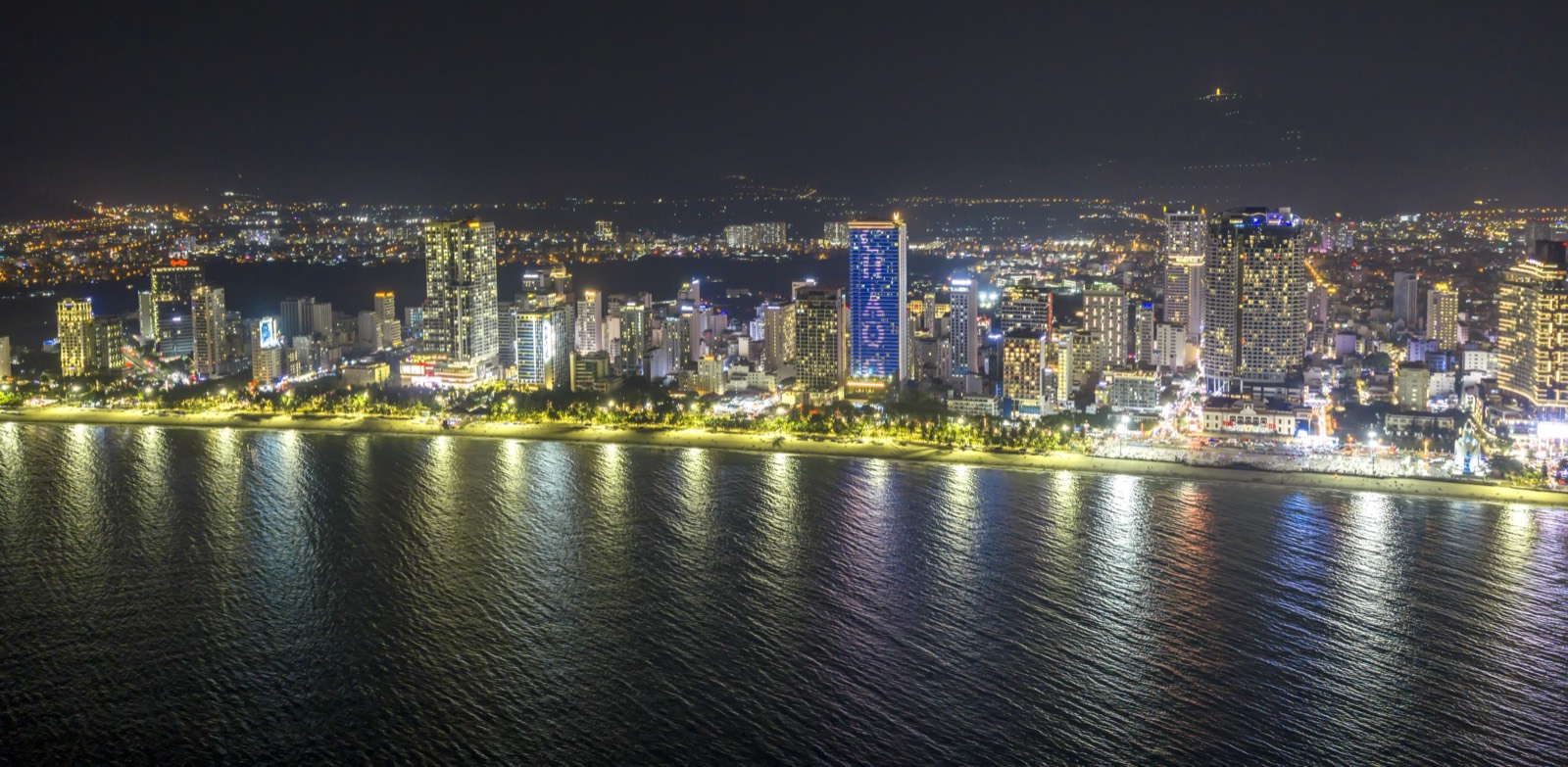
A year earlier, in August 2016, a traveller posting as Тамарита opened a trip report with the line "The Russians have taken over Nha Trang!" (the post, 17 August 2016). She wrote it after an evening in the tourist area — lights, music, songs from home drifting out of a restaurant — and says hearing her own language from every direction confirmed the impression completely.
It is worth reading that without a sneer in either direction. She is not complaining and she is not embarrassed — a familiar language after a long flight is a relief, not a failure of character.
The second ingredient is density. In March 2013 sahn77 reported from a hotel that was, in his words, entirely occupied by Russian-speaking holidaymakers, then joked that the staff here were lazy and would not learn the language (the post). The joke carries the misunderstanding whole: concentration in one building had reached the point where a guest half-expected reception to have adapted to him.
That is the mechanism. Package tourism delivers large numbers of people into a small number of streets, and businesses there translate their signage because it pays — a service layer that demand called into existence, not a census.
Who actually speaks Russian
The most useful post in that thread came from the man who started it. Юрий Гребенников had arrived on a package tour, and two days after being told that no preparation was needed he wrote his own correction: for all of Nha Trang's touristiness, this is Southeast Asia and things work differently — the smells, the traffic, and the fact that the people speaking Russian are Russians plus some elderly Vietnamese excursion guides who studied in the Soviet republics long ago (the post, 14 September 2017).
Strip out the travelogue and that is a precise description of a layer, both occupational and generational. Russian in Nha Trang lives where money and history put it: excursion sales, hotel and restaurant desks, a few clinics and agencies, and a shrinking cohort educated in the USSR. It does not live in the trades, in building management, on a district clinic's night shift or behind a bank counter.
These posts are old; businesses close and staff turn over. Take the shape of the thing from them, not its current boundaries.
The number that does not exist
The obvious next question is what share of Nha Trang's residents are Russian-speaking. There is no reliable current figure, and this guide is not going to manufacture one.
Each of the usual substitutes measures something else. Tourist arrival statistics count visits, not residents — one person on three trips is three arrivals. Registration figures count the people who registered. Counting Cyrillic shopfronts measures a marketing decision, and counting listings written in Russian measures who typed the listing, usually an agent with a translation tool.
A percentage would not settle it anyway. "Russian city" is a claim about scope, not arithmetic: spend your evenings on two tourist streets and four per cent feels like sixty; rent north of the river and buy vegetables at a local market and sixty would still feel like four. The honest formulation is the one berngo gave in 2017 — a corridor where Russian works, and a city around it where it does not.
Where the bubble stops covering you
For a two-week holiday the corridor is enough. For a lease, the question is not "do people speak Russian here" but "which of my problems get solved in Russian, by whom, and what happens at 9pm on a Sunday."
Run the list before you sign. Who manages the building, and in what language do they answer a message? Can you read an electricity bill and challenge it? When the air conditioner dies in month four, will the person who translated your viewing still pick up? Can you explain a blocked card to a bank, or a symptom at a pharmacy counter?
The lease is where the money is. Deposits, utilities and exit conditions are the expensive part of moving anywhere in Vietnam and are worth translating properly — our guide to rental deposits covers what the contract needs to say and where deposits actually get lost, and renting in Nha Trang has the local mechanics.
The protections are boring and cheap: enough Vietnamese to be polite and name your street, your address saved the way a taxi driver reads it, offline translation on the phone, and a real translator for anything carrying a signature or a diagnosis.
Choose a street, not a reputation
Nha Trang is small enough that the distance between "Little Russia" and "real Vietnam" is often a fifteen-minute ride, which is why the city-level label is a poor planning tool. Our breakdown of Nha Trang neighbourhoods sorts them by what they are like to live in, Vĩnh Hải and Hòn Chồng looks closely at one district that sits outside the corridor, and living in Nha Trang as an expat covers daily life, costs and paperwork.
Market data says nothing about language, which is exactly why it is useful here.Those are asking prices from a sample smaller than Hanoi's or Da Nang's — use them for scale and for spotting listings too cheap to be real, not as a neighbourhood survey.
Then go and walk. Visit candidate streets in the morning and again after dark, when the tourist economy switches on and the difference between two addresses becomes audible. Message whoever will manage your tenancy the way you plan to message them all year, and see what comes back. A city's nickname has never fixed an air conditioner.
Our rent-price page carries the current Nha Trang median and the spread around it — we link it rather than reprint it, because the figure moves with every crawl and a number frozen into an article is wrong within the week. The spread is the part worth reading anyway: the range inside the city is far wider than the gap between Nha Trang and anywhere else, and it is an asking price, not what a tenant paid after negotiating.
Frequently asked questions
- Can I live in Nha Trang using only Russian?
- In the tourist corridor you can eat, shop and book excursions in Russian. A lease, a utility dispute, a repair or a clinic visit is another matter — berngo described local districts in 2017 where neither Russian nor English was spoken. Plan for translation support and basic Vietnamese or English.
- Where is the Russian-language layer concentrated?
- Older accounts put it in the central tourist area near the beach, what forum members called the European Quarter. That was 2017 and businesses turn over constantly, so treat it as a hypothesis and confirm on the ground before choosing an address.
- How many Russians actually live in Nha Trang?
- There is no reliable current figure, and any specific percentage you find online is worth checking hard. Arrivals count trips rather than residents, registration data counts only those who registered, and counting shop signs measures advertising. This guide deliberately gives no number.
- Does a listing written in Russian mean a Russian-speaking landlord?
- No. Descriptions are usually written by agents or run through translation software. Before you pay anything, speak with the person who will handle repairs and rent after move-in, and establish which language actually works with them.
- Can I avoid the Russian-speaking bubble if I want to?
- Easily — it is geographically small. Rent outside the beach tourist strip, shop at local markets and build a routine that does not route through excursion streets. Districts like Vĩnh Hải and Hòn Chồng sit well outside it.
- Does the reputation make Nha Trang a worse place to live?
- It mostly makes it a badly described one. The same city holds a seasonal tourist economy, ordinary residential districts and a beach that belongs to everyone. Your building, your route to work and your neighbours decide what living here feels like — the nickname does not.
Updated: 2026-08-05