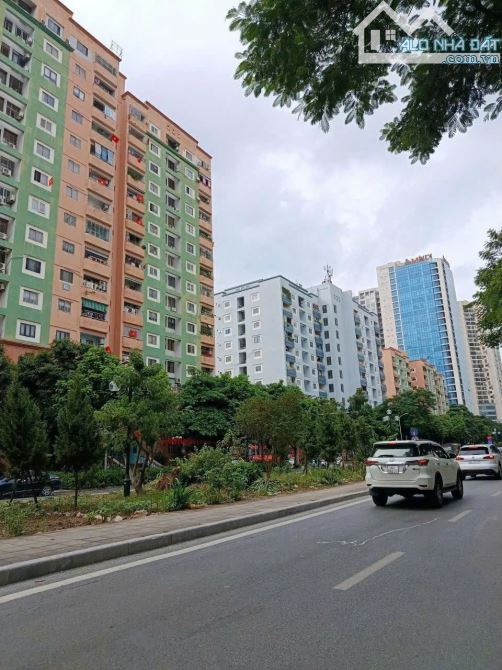
The office belt in one picture
The area runs along two axes. The first is the old road west: Cầu Giấy street becoming Xuân Thủy becoming Hồ Tùng Mậu, a corridor of universities, shops and now metro pillars, stretching from Thủ Lệ zoo out toward Nhổn. The second runs south — Trần Duy Hưng with its malls and Korean-owned Charmvit tower, and Phạm Hùng under the elevated Ring Road 3, past Keangnam Landmark 72, the National Convention Center, the JW Marriott and Mỹ Đình National Stadium. Between and around them sit the tech offices of Duy Tân and Phạm Văn Bạch, the ministries' back offices, and dozens of apartment compounds.
Who actually lives here: Vietnamese professionals and their families, tens of thousands of students (Vietnam National University, the University of Education and the Academy of Journalism all sit on Xuân Thủy, the University of Commerce on Hồ Tùng Mậu), and the city's largest Korean and Japanese communities. There is no heritage streetscape and no tourist trail — this is "new Hanoi", the direction the city's centre of gravity has been drifting for two decades. Evenings are quieter than the centre: nightlife means Korean BBQ smoke, bia hơi stools and mall cinemas rather than cocktail bars.
Addresses after 2025: why your contract says Phường Từ Liêm
On 1 July 2025 Hanoi abolished its districts and replaced thirty of them with 126 wards and communes, and this corner of the city got redrawn hard. The old Cầu Giấy district became three wards: Cầu Giấy (roughly the former Dịch Vọng and Dịch Vọng Hậu, plus slivers of neighbours — including, absurdly, bits of former Mỹ Đình 1 and 2), Nghĩa Đô in the north and Yên Hòa, which swallowed both old Yên Hòa and Trung Hòa. Nam Từ Liêm district disappeared entirely: Mỹ Đình 1, Mỹ Đình 2, Mễ Trì, Phú Đô and Cầu Diễn were mostly fused into one big Phường Từ Liêm.
On the ground, nobody talks like this. Landlords, Grab drivers and listings still say Mỹ Đình, Trung Hòa, Nghĩa Tân or Mai Dịch, while contracts and electricity bills now carry the new ward names — so a flat advertised "in Mỹ Đình" and a lease reading "Phường Từ Liêm, Hà Nội" describe the same address. Navigate by building name and street, not by ward. And keep both versions of the address in your paperwork: your landlord's temporary-residence registration for immigration uses the new one, and mismatches between lease and registration are a headache you don't want at visa-extension time.
Koreatown reality: K-Town, Keangnam and the two Korean clusters
Hanoi's K-Town proper sits in the Mỹ Đình Sông Đà / The Manor pocket: about a kilometre of Trần Văn Lai and Đỗ Đình Thiện streets holding some forty Korean restaurants plus K-Market supermarkets, hair salons, red-ginseng shops, Korean estate agencies, cram schools and karaoke rooms — most of them Korean-owned and Korean-staffed. The gravitational centre next door is Keangnam Landmark 72 on Phạm Hùng: 72 floors, Vietnam's tallest building from 2011 to 2018, with Korean corporate offices in the tower and two 48-floor residential blocks beside it. Higher-earning Korean families cluster here; the older, mid-budget Korean quarter is Trung Hòa–Nhân Chính to the south-east, colonised since the mid-2000s. Samsung's R&D campus at Starlake, just north across the district line, keeps the demand growing.
For a non-Korean renter this is mostly upside. You get the best Korean food in northern Vietnam at fair prices, supermarkets that stock proper tofu, decent meat cuts and vegetables beyond the wet-market basics, and landlords and agents who are used to foreign tenants even where English is thin (Korean often works better than English here). Schools follow the community: the Korean International School sits in Mai Dịch between the two clusters, the Japanese School of Hanoi is out here in the Mỹ Đình direction, and the big compounds carry Vinschool campuses. Just calibrate expectations — this is a working immigrant district, not an expat playground; think shuttle buses and BBQ smoke, not brunch.
Apartment stock: Vinhomes-grade compounds vs local blocks and mini-flats
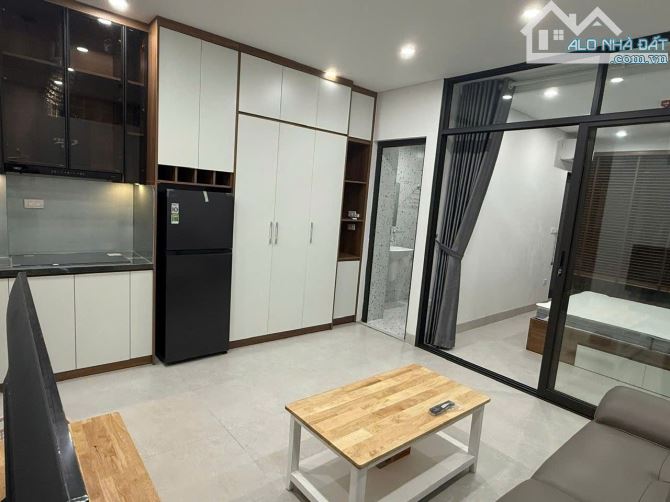
The west is where Hanoi's compound living is concentrated. Vinhomes Skylake on Phạm Hùng, Vinhomes Gardenia off Hàm Nghi, West Point and Green Bay by the convention-centre end of Mễ Trì, D'Capitale on Trần Duy Hưng, Indochina Plaza (IPH) right at the VNU metra station on Xuân Thủy, Discovery Complex at 302 Cầu Giấy, GoldMark City on Hồ Tùng Mậu, plus Mandarin Garden and Home City in the Trung Hòa–Trung Kính belt. The formula: pool and gym on the podium, a mall or minimart downstairs, playgrounds, security and building management; most units are investor-owned, so they come furnished and prices are negotiable — walk several, because furniture quality swings wildly. Densities differ too: D'Capitale packs small units into tall towers, Gardenia and Skylake breathe easier. For equivalent spec you generally pay noticeably less than in Tây Hồ; Keangnam's residences and the serviced blocks around Duy Tân mark the area's top end.
Below the compounds sits the local stock, and it is where the real value hides. Trung Hòa–Nhân Chính's early-2000s Vinaconex towers offer spacious layouts with dated lobbies at friendlier prices; the KĐT Mỹ Đình I and II blocks are similar in spirit. Cheapest of all are the chung cư mini studios filling the alleys of Yên Hòa, Quan Hoa and Dịch Vọng — fine for a student budget, but check them like your life depends on it, because after the 2023 mini-apartment fire in nearby Khương Hạ the risks stopped being theoretical: insist on a real escape route, skip windowless "lofts", and look at where the motorbikes charge. Whatever you rent, the standard Vietnam rules apply — one-to-two months' deposit, a bilingual contract, and never a transfer before you've stood in the actual room.
Metro Line 3, Ring Road 3 and the honest commute maths
The west finally has the transit it was built for. Line 3's elevated section — French-financed, Alstom trains — has run since August 2024 from Nhổn to Cầu Giấy: 8.5 km and eight stations tracking the Hồ Tùng Mậu–Xuân Thủy–Cầu Giấy corridor, roughly 5:30 in the morning to 10 at night. Lê Đức Thọ station serves northern Mỹ Đình, Đại học Quốc gia lands you at VNU and IPH, and the Cầu Giấy terminus sits by Thủ Lệ at the Ba Đình border. The catch: the underground leg to Hanoi Station is officially slated for around the end of 2027, so until then the metro is superb along its own corridor and useless for reaching the centre.
That means the centre is still a scooter or Grab run, and you should test it at 8 a.m. before signing anything. Off-peak, the Old Quarter is 20–25 minutes from Cầu Giấy; at rush hour (roughly 7–9 and 17–19) the Xuân Thủy–Cầu Giấy corridor and Phạm Hùng under the Ring Road 3 viaduct are among the worst traffic in the city, and the same trip can double. Deep Mỹ Đình adds another ten minutes to everything. One under-rated perk: Mỹ Đình bus station on Phạm Hùng is the gateway for sleeper buses to Sapa and Hà Giang, which makes weekend escapes from this side of town genuinely easy.
Daily life: student food, parks, markets — and a river that finally got cleaned
The university belt keeps the area honest and cheap. Some of Hanoi's best-value everyday food hides around Nghĩa Tân market's alleys (old-school snacks like bánh đúc nóng included) and in the student streets off Xuân Thủy, while chợ Nhà Xanh on Phan Văn Trường sells student-priced everything from hangers to hoodies. For groceries there's the giant Big C Thăng Long on Trần Duy Hưng, K-Markets across the Korean pockets, and Vincom malls (one sits inside D'Capitale); The Garden mall adjoins The Manor, and Lotte Mall West Lake is a 10–15 minute ride north from Nghĩa Đô. Coffee is everywhere, though the specialty-roaster and laptop-café scene is thinner than Tây Hồ's — the trade-off of a district that works office hours.
Green space and culture hold up better than the west's concrete reputation suggests. Cầu Giấy Park off Thành Thái is the family park of the west side, Nghĩa Đô Park sits nearby, the excellent Museum of Ethnology on Nguyễn Văn Huyên is the one sight worth crossing town for, and Thủ Lệ zoo guards the eastern gate; Mỹ Đình stadium hosts the mega-concerts (BLACKPINK filled it two nights running in 2023). And the Tô Lịch river — for years the black, smelly canal along Nguyễn Khang and Láng that made riverside flats an automatic no — got real remediation in 2025: outfalls intercepted, the Yên Xá treatment plant online, water visibly better and mostly no longer reeking. It's progress, not a miracle; sniff-test any riverside address yourself on a hot afternoon before you commit.
Air and seasons: the winter you must plan for
No honest guide to west Hanoi skips this. From November to February, temperature inversions trap traffic and construction dust over the city; on the worst January 2025 mornings Hanoi topped the global pollution rankings with AQI readings around 300, and through winter 2025–26 it kept appearing in the world's top-ten most-polluted list with AQI in the high 100s. The west side adds its own load — tower construction and the diesel stream under Ring Road 3 — so treat December–February as indoor season: air purifiers in the bedrooms, an AQI app you actually check, N95 masks for bad mornings.
The seasons cut both ways here, though. Hanoi's winter is genuinely cold (grey, damp, 10–15°C, no central heating anywhere) and February–April brings nồm ẩm, the notorious damp when walls sweat and floors stay wet for weeks — and this is where Cầu Giấy–Mỹ Đình's newer stock quietly earns its keep, because a well-sealed 2015-built compound flat with decent AC and a dehumidifier handles both the cold and the damp far better than a charming old tube house in the centre. Summer is the usual furnace with monsoon downpours; check which streets around your building flood, because parts of the west go under water fast in a big storm. Autumn, September to November, is the payoff season everywhere in Hanoi.
Cầu Giấy & Mỹ Đình vs Tây Hồ vs Hoàn Kiếm: the verdict
Choose the west if your life points west. That means: your office is in the Duy Tân–Phạm Hùng belt or a Korean/Japanese company, your kids attend the Korean International School, the Japanese School or a Vinschool, you're attached to a university, or you simply want a newer, bigger flat with a pool for money that would rent a tired one-bedroom near the lake. It also suits long-stayers who don't need an English-speaking bubble and are happy living among Vietnamese neighbours with a Korean supermarket downstairs. The metro corridor makes the Nhổn-to-Cầu Giấy strip more liveable car-free than most of Hanoi.
Skip it if what you're really buying is the expat ecosystem — lakeside mornings, brunch, natural wine, instant English-speaking community — because that lives in Tây Hồ and doesn't commute. Hoàn Kiếm and the Old Quarter remain the right call for a short, atmospheric stint rather than a long lease, with noise and tourist churn as the price of romance. The practical play here is the same as everywhere in Vietnam: rent for a month before signing a year, ride your exact commute at peak hour, check the ward name on the contract matches the landlord's papers, and negotiate — in a district with this much apartment supply, there is always another flat.
Frequently asked questions
- Is Cầu Giấy a good area for expats to live in Hanoi?
- Yes — if you work on the west side, have kids in the Korean or Japanese schools, or want a newer flat for less than Tây Hồ prices. It's modern, safe and well-supplied, with the metro's Line 3 running through it. The trade-off is a thinner expat social scene and less English: this is a working district of Vietnamese professionals plus large Korean and Japanese communities, not a foreigner bubble.
- Where is Koreatown in Hanoi?
- The main K-Town is in Mỹ Đình, along Trần Văn Lai and Đỗ Đình Thiện streets in the The Manor / Mỹ Đình Sông Đà area — roughly a kilometre with about forty Korean restaurants, K-Market supermarkets, salons and Korean services, next to Keangnam Landmark 72. A second, older and more mid-budget Korean cluster sits in Trung Hòa–Nhân Chính on the Cầu Giấy–Thanh Xuân border.
- Does the Hanoi metro serve Cầu Giấy and Mỹ Đình?
- Yes. Line 3's elevated section has run since August 2024 from Nhổn to Cầu Giấy — eight stations along Hồ Tùng Mậu, Xuân Thủy and Cầu Giấy street, with Lê Đức Thọ station covering northern Mỹ Đình, roughly 5:30 to 22:00 daily. The underground extension to Hanoi Station is slated for around late 2027, so trips to the city centre still mean a scooter or Grab for now.
- Is renting in Cầu Giấy or Mỹ Đình cheaper than Tây Hồ?
- Generally yes, for equivalent quality — you are not paying the lake-and-expat-ecosystem premium, and much of the stock is newer. Compound flats in Vinhomes-type projects typically undercut similar-spec Tây Hồ apartments, and local blocks like Trung Hòa–Nhân Chính or KĐT Mỹ Đình cost less again. Top-end serviced residences around Keangnam and Duy Tân are the exception and price well above the area norm.
- My rental contract says Phường Từ Liêm — is that Mỹ Đình?
- Yes. In Vietnam's July 2025 administrative reform Hanoi abolished districts: the former Mỹ Đình 1 and 2, Mễ Trì, Phú Đô and Cầu Diễn wards were mostly merged into a new Phường Từ Liêm, while the old Cầu Giấy district became the wards of Cầu Giấy, Nghĩa Đô and Yên Hòa (the latter absorbing Trung Hòa). Everyone still uses the old names in daily speech and listings; contracts and residence registration use the new ones.
- How far are Cầu Giấy and Mỹ Đình from the Old Quarter?
- Cầu Giấy is about 7 km from Hoàn Kiếm — 20–25 minutes by scooter or Grab off-peak, easily double at rush hour on the Xuân Thủy–Cầu Giấy corridor. Deep Mỹ Đình is closer to 10 km and adds another ten minutes. The metro doesn't reach the centre yet (the underground leg is due around late 2027), and it stops around 22:00, so late nights out end with a Grab ride home.
Updated: 2026-07-10