A grid that was never supposed to be a village
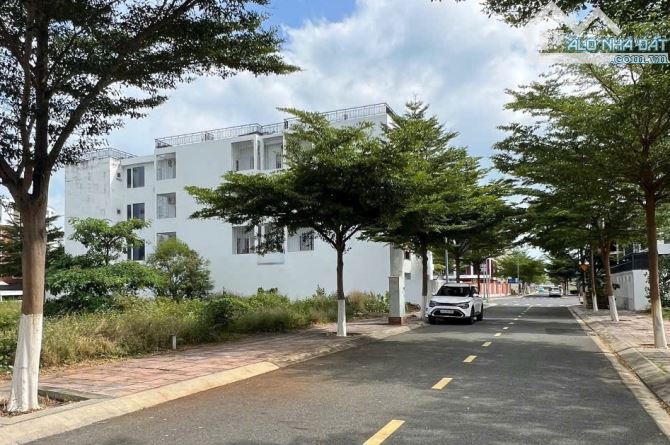
An Thượng is an accident of good luck. The land was empty military ground as recently as 2000 — a genuine blank slate near the beach. When the city laid out the streets (numbered An Thượng 1 through 42, in gloriously illogical order), it wasn't planning a nomad hub; it just carved small plots and let individual owners build. That's why the neighbourhood feels different from a developer-master-planned resort strip: you get architectural jumble, narrow Vietnamese tube houses next to boutique hotels, a café in a converted family home beside a Korean BBQ joint. Over roughly two decades (2002–2024) that mess quietly became one of the most walkable coastal neighbourhoods in Southeast Asia. The catch is baked into the same history: all that concrete poured over what used to be absorbent ground, and almost no parks — one small community green space for the whole district. Keep that in mind; it comes back in the rainy season.
The walkable café-coworking-yoga machine
This is the real draw, and it's not exaggerated. Within a 10-minute walk you have dozens of work-friendly cafés with fast fibre and air-con, several proper coworking spaces (Hive, the newer glossy one, has standing desks, external monitors, a juice bar and even an ice bath), yoga studios, gyms, and a beach you can be swimming at before your coffee gets cold. The cafés double as offices; nobody blinks at a laptop parked for four hours. What makes it click for newcomers is the density — everything is close enough that you build a routine in a week, and the community layer sits right on top: weekly meetups, language exchanges, beach days, the annual Vietnam Nomad Fest. If you've ever arrived somewhere new and spent a month lonely, An Thượng is the antidote. You get instant community, sometimes whether you want it or not.
Two overlapping worlds: Korean and Russian
An Thượng isn't one expat scene, it's several stacked on top of each other. Walk north to the Phạm Văn Đồng corridor and you're effectively in Little Korea: dozens of Korean restaurants, marts stocking Seoul groceries, massage and beauty places, signage in Hangul. Korean money and Korean tourists shaped a big chunk of Đà Nẵng, and it shows. Layered over it is a substantial Russian-speaking presence — the kind where three years in, most of the Russians you meet have quietly settled right here. There's a Russian-language school (Gorizont runs a Đà Nẵng branch), active Telegram chats (search 'Da Nang RU' and the big Vietnam relocation channels before you fly — that's where people flag trustworthy landlords and warn about scams), and enough Russian-speaking cafés, hairdressers and agents that you can run daily life in Russian if you need to. Then there's the broader Western nomad crowd on top. The upside: whatever your language, you'll find your people. The flip side is the next section.
The 'expat tax' and other soft scams
Convenience has a price and in An Thượng it's literal. Locals and long-timers call it the expat tax: the same haircut that's 40,000 VND two districts over is 100,000 here; scooter rentals, laundry, produce and rent all carry a foreigner markup baked into the neighbourhood. It's rarely aggressive — more a quiet assumption that if you live in the fancy walkable zone you can pay the fancy walkable price. You can push back by shopping at the local market instead of the Western minimart, learning the numbers in Vietnamese, and getting apartment leads from community chats rather than English-facing agents who tack on commission. The other classic trap is the lease itself: 'included' electricity that's actually billed at a tourist rate, deposits that evaporate at move-out, and photogenic listings that turn out to sit above a construction site. Which brings us to the honest downside.
Noise, dust and the construction that never stops
An Thượng is loud. It's a neighbourhood still actively being built — cranes and jackhammers are a near-constant daytime soundtrack in some blocks, kicking up dust with them. Layer on scooter horns, karaoke drifting from bars, night-market megaphones, and the backpacker nightlife around Ngô Thị Sỹ and An Thượng 4 (the main strip, busiest and rowdiest), and 'peaceful beach town' is not the phrase. The fix is granular: An Thượng 1 and 2 are the calmer residential streets; the numbered lanes away from the strip and the bar cluster are noticeably quieter. The single most important renting rule in this neighbourhood: never sign for a place you've only seen in daylight photos. Book it for two or three nights first and listen — for the karaoke bar next door, the 7am construction crew, the karaoke bar next door again. Whatever the listing swears, verify with your own ears.
The monsoon, the floods and the air you actually breathe
Two things the beach photos won't tell you. First, the rain. October and November are the wettest months in central Vietnam, with rainfall that can top 600mm a month and typhoons rolling in off the East Sea. Remember all that concrete and the missing parks? Low-lying An Thượng streets can sit under water for a few hours after a heavy downpour, and while it's nowhere near as biblical as neighbouring Hội An (whose old town genuinely goes underwater), you should treat a ground-floor apartment and a rainy-season arrival with real caution. Second, the good news that surprises people: the air is clean. Average AQI sits around 30–50 — roughly twice as good as Hồ Chí Minh City at rush hour — because you're on the coast with sea breeze and away from the industrial sprawl. For a lot of people leaving smoggier Asian cities, that alone seals the decision.
Rent bands and the quieter alternative one highway over
Rough shape of the market, in relative terms (the live medians on this page will be more current than any number I'd quote). A studio or small one-bedroom in the walkable core is the entry point — comfortable but carrying the An Thượng premium. A proper two-bedroom in a decent building sits in the mid band; a standalone villa or a big serviced apartment is the higher end, and villas jump sharply from there. You pay for walkability and community, not square metres. If that maths doesn't work — or the noise doesn't — look at Khuê Mỹ, just across the highway. It's a genuinely local neighbourhood where few foreigners bother, which is exactly its charm: quieter streets, more space for your money, green walkways along the Hàn River, and it's dog-and-family friendly. The trade-off is you'll need a scooter to reach the beach and the café scene, and you'll be more embedded in Vietnamese daily life than the English-signage bubble of An Thượng. For newer, cheaper, larger apartments the Phạm Văn Đồng corridor is another honest option.
So who is this actually for?
An Thượng and Mỹ An are close to perfect for one specific person: the solo remote worker or nomad who wants to land soft, skip the motorbike learning curve, walk everywhere, and have a social life by week two — and who's willing to pay the premium and tune out the noise for that ease. It suits couples and first-timers to Vietnam beautifully. It's a weaker fit if you're chasing quiet, want to stretch a budget, have young kids who need green space and calm, or came to Vietnam to actually live in Vietnam rather than an international bubble by the sea — for those, Khuê Mỹ, Sơn Trà or a quieter numbered lane serve you better. The smartest play is almost always the same: rent a serviced place in the An Thượng core for your first month, use it as a base to build a network and scout with your own eyes, then decide whether to stay in the village or move one highway over into the quiet. The community you build here travels with you either way.