The lay of the land: what Hải Châu actually is
Hải Châu is Đà Nẵng's administrative and commercial heart — the district the locals mean when they say "downtown." It sits on the western bank of the Hàn River, roughly framed by the Dragon Bridge (Cầu Rồng) to the south and the swing bridge (Cầu Sông Hàn) at the river mouth. The spine of the area is Bạch Đằng, the riverfront street, backed by Trần Phú one block in, with big arteries like Lê Duẩn, Hùng Vương, Nguyễn Văn Linh and 2 Tháng 9 carrying the city's traffic. Unlike the beach strip, this is not a tourist bubble dressed up as a neighbourhood — it's a working Vietnamese city, and that's precisely the point. You'll have banks, government offices, malls (Vincom, Vĩnh Trung Plaza), proper furniture and electronics stores, and hospitals all within a short ride, instead of the thin, tourist-depth shops of the beach side. If your idea of a good life is being able to walk out the door and immediately be inside the life of a place — rather than beside it — Hải Châu delivers that in a way An Thượng structurally cannot.
The riverfront, the Dragon Bridge and the Pink Cathedral
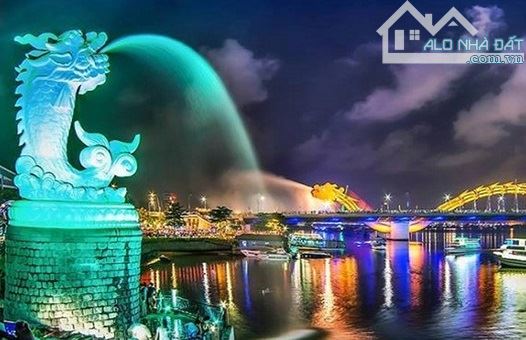
The Hàn River promenade is the district's living room. In the cool of the morning and again after the heat breaks around six, the Bạch Đằng walkway fills with joggers, badminton players and families, with the illuminated bridges strung across the water. The Dragon Bridge (Cầu Rồng) breathes real fire and water Friday through Sunday at 9 pm — genuinely worth seeing once, though you'll learn to route around the crowds and the scooter gridlock it creates. A few streets inland at 156 Trần Phú stands the landmark expats and locals alike fixate on: Nhà thờ Con Gà, the "Rooster Church," better known to visitors as the Pink Cathedral. Built in 1923–24 to serve the city's French Catholics, it's a candy-pink Gothic confection topped with a weathercock — the rooster of St Peter's repentance, not, as people assume, a symbol of France. It still holds services, so it's a functioning church rather than a photo backdrop, and the surrounding blocks are some of the most walkable in the whole district.
Markets, dining and the reason foodies move here
This is Hải Châu's quiet superpower. Chợ Hàn (Hàn Market, 119 Trần Phú) runs roughly 6 am to 7 pm — a compact, central wet-and-dry market good for produce, dried seafood and a fast bowl of something. The real institution, though, is Chợ Cồn (Cồn Market, 290 Hùng Vương), a sprawling food maze where the đặc sản — bún, bánh canh, grilled everything — costs a fraction of tourist-menu prices. For sit-down central-Vietnamese cooking you're spoiled: Madame Lân at 04 Bạch Đằng does home-style classics with a river view; Ăn Thôi at 114 Bạch Đằng brings colonial charm and even a Michelin nod; and for the dishes that never make it onto beach-side English menus, chase down Bún Chả Cá 109, Mì Quảng 1A, or the legendary Bánh Xèo Bà Dưỡng. The bánh xèo here are the crisp, small central style — nothing like the big southern ones. Evenings, the Sơn Trà Night Market near the Dragon Bridge and the Helio food court fill in the gaps. This is street food at 15,000–50,000 VND a plate, not curated "experiences."
Hospitals, schools and why families choose the centre
For anyone relocating with health or children on their mind, Hải Châu is the most reassuring address in the city, because the medical and education infrastructure is right here rather than a river away. Đà Nẵng Family Medical Practice at 96–98 Nguyễn Văn Linh is the private, foreigner-oriented practice most expats default to for English-speaking care; Vinmec Đà Nẵng at 30 Tháng 4 is the polished international-standard hospital; and Hoàn Mỹ is the well-regarded, more affordable private option with strong cardiology and women's health. Be honest with yourself about the ceiling, though: for genuinely complex or specialist treatment, many expats still fly to Hồ Chí Minh City or Bangkok. On schools, Đà Nẵng's international options (Singapore International School, St Nicholas, Green Shoots with its British/IB pathway, APU American) are spread across the metro rather than concentrated in one ward, but living centrally keeps the commute to any of them manageable. Families who prioritise a short, reliable run to a hospital and school over daily beach access consistently land in Hải Châu.
Where you'll actually live: serviced apartments and city buildings
Hải Châu's rental stock skews toward modern, professionally-managed serviced apartments and mini-buildings — the kind where twice-weekly cleaning, wifi and a front desk are baked into the rent and you pay only electricity (and sometimes a token water charge) on top. That management layer is a real quality-of-life difference from the more informal beach rentals: someone answers when the aircon dies. At the higher end you'll hear the same landmark buildings named — Hiyori Garden Tower and Azura on the peninsula-facing riverfront — for full-amenity, gym-and-pool, doorman living with Hàn River views. Expect the centre to run a touch pricier than a comparable An Thượng one-bed, largely because so much of the stock is newer serviced product rather than older house-conversions. What you're buying with that premium is walkability, big-supermarket convenience, and a building that's actually run rather than merely rented.
City energy vs beach life — and the honest trade-offs
Here's the deal nobody sells you on the glossy relocation blogs. Hải Châu is a real city, and real cities are loud. Peak-hour scooter traffic on Lê Duẩn, Hùng Vương and the bridge approaches is dense, and Vietnamese traffic treats rules as suggestions — it's still far calmer than Hà Nội or Sài Gòn, but it is not the sleepy beach lane. Pick your street carefully: a unit facing a main road means horns from 6 am; one block back is a different world. Air quality is generally good for Vietnam thanks to the coast, but it dips in the dry season (roughly January to August) when there's no rain to wash the dust and scooter exhaust out — and it's measurably worst in the 6–11 am window. And then there's the rain: the wet season (September to December) brings serious flooding, and central Hải Châu is not spared. The roads around the Đà Nẵng hospitals on Lê Duẩn have gone under half a metre of water in bad storms. If you're at ground level, ask the landlord bluntly how the building floods.
The language gap, scams and the community question
The single biggest daily adjustment coming from the An Thượng bubble is language. In the beach zone, cafés, gyms and landlords speak functional English by default; in Hải Châu you're in the actual Vietnamese city, and English drops off fast once you leave the riverfront restaurants and hospitals. Google Translate, a smile and a bit of pointing genuinely carry you, and it makes for faster real integration — but if you want to be understood at the noodle stall or by the plumber, this is a steeper on-ramp. Scam-wise, Đà Nẵng is relaxed by Vietnamese standards; the usual sensible habits apply — agree Grab or taxi fares/meters up front, read the rental contract's electricity clause (metered mark-ups are the classic squeeze), and don't hand over a deposit before seeing the actual unit. On community: the tight expat social scene really does live over on the beach side, so Hải Châu can feel more solitary if you crave a ready-made crowd. The flip side is a life that's Vietnamese first and foreigner-adjacent second — and the beach and its bars are only ten to fifteen minutes over the Dragon Bridge whenever you want them. Hải Châu suits the professional who wants a functioning city, the foodie who wants the real menu, and the family who wants the hospital close. It suits the beach-bum considerably less — and that's a feature, not a bug.