The lake is the whole point — and it's genuinely magic
Hoàn Kiếm (Hồ Hoàn Kiếm, "Lake of the Returned Sword") is the emotional center of Hà Nội, and it earns it. The Turtle Tower (Tháp Rùa) sits on its little island; the vermilion Huc Bridge crosses to Ngọc Sơn Temple, dedicated to the general Trần Hưng Đạo. But the real reason to love it is the daily rhythm. Come at 6am and the lakeside path fills with locals doing tai chi, badminton, and that gentle meditative aerobics that looks like slow-motion dancing. By evening the benches are full of couples, families, and old men playing Chinese chess. On weekends — Friday evening through Sunday — the ring road around the lake and much of the Old Quarter closes to traffic and becomes the phố đi bộ (walking street): kids on toy cars, live music, street performers, families everywhere. For a few hours, the honking stops and the city breathes. If you live here, that lake loop becomes your living room, your gym, and your therapist. It's the single best argument for the whole district.
The 36 Streets: a living museum you actually live inside
The Old Quarter (Phố Cổ) is the medieval merchant district just north of the lake — the famous "36 streets," each historically named Hàng (meaning "merchandise") plus a trade: Hàng Bạc (silver), Hàng Gai (silk/hemp), Hàng Mã (paper offerings), Hàng Thiếc (tin). Astonishingly, many still sell roughly what they always did — you'll walk a street that's entirely shoe shops, then one that's all sheet metal, then all silk. It's genuinely one of the oldest continuously-inhabited commercial quarters in Southeast Asia, dating back centuries. Living inside it means your "neighborhood shop" is a 400-year-old trade guild. The trade-off: these streets were laid out for foot traffic and handcarts, not for you and 10,000 motorbikes. The pavements are usually occupied — parked bikes, plastic stools, a woman grilling pork over coals — so you walk in the road, which is a skill you'll acquire fast. Just south is the leafier, calmer French Quarter (around the Opera House and the Metropole), all wide boulevards and colonial villas — a completely different, more elegant feel, and worth knowing as your escape hatch a five-minute walk away.
Food and coffee: this is the reason people never leave
You will eat extraordinarily well and it will cost almost nothing. Hà Nội's food is its own northern school — subtler and more herb-forward than the south. Learn these by heart: phở bò (the city basically invented it — Phở Bát Đàn on Bát Đàn street has a legendary queue, Phở Sướng is a local's local), bún chả (grilled pork in dipping broth — Bún Chả Hương Liên became "Obama bún chả" after his visit with Anthony Bourdain), bún riêu (crab-tomato noodle soup), chả cá (turmeric fish, there's a whole street named after it, Chả Cá Lã Vọng), and bánh cuốn (steamed rice rolls). And you must have cà phê trứng — egg coffee — at Cafe Giảng on Nguyễn Hữu Huân, run since 1946 by the family of the man who invented it. Most meals run tiny, single-digit-dollar prices; a bowl of phở costs less than a coffee back home. The catch nobody mentions: prices near the lake are inflated for tourists, and "tourist menu" versions of dishes are worse and pricier. The move is to eat where the plastic stools are full of Vietnamese office workers at lunch, one street back from the tourist drag.
The noise, the crowds, the tube-house reality
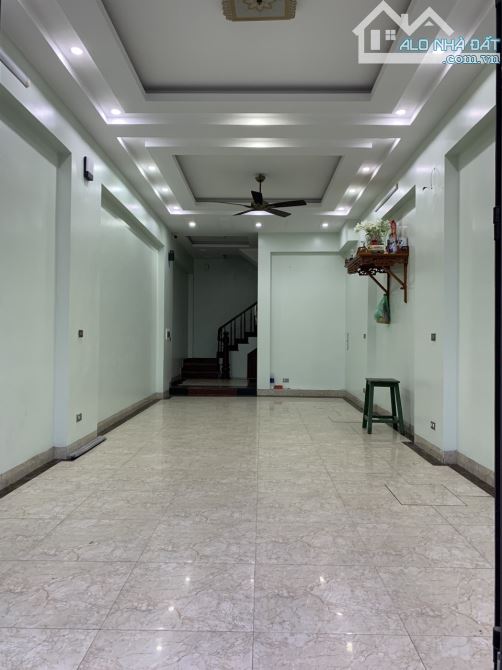
Here's the part the guidebooks skip. Hoàn Kiếm is loud in a way that's hard to convey — a constant layer of motorbike horns (drivers honk not in anger but to say "I'm here," so it literally never stops), shophouse renovations, karaoke, delivery shouting, and on weekends, live-music PA systems until late. Then there's the housing itself. The Old Quarter is built of nhà ống — "tube houses," often only 3–4 meters wide but stretching far back and rising five, six, seven floors, frequently with no elevator. Because the only windows are usually at the front and back, the middle floors can be genuinely dark and airless, and you may share a stairwell with several other families or businesses. Rentals here skew small, sometimes windowless, and you'll pay a premium precisely because it's central and touristy. A Russian nomad who wrote up her Hà Nội year lasted exactly two weeks in the Old Quarter before the sensory overload drove her to Tây Hồ. That's not unusual. Go in with eyes open: this is a neighborhood that rewards a certain temperament and punishes a need for calm.
Getting around: your feet, then Grab, and now a metro
The upside of the density is that Hoàn Kiếm is the most walkable place in Hà Nội — the Old Quarter, the lake, and the French Quarter form a compact core where your own two feet genuinely beat any vehicle. For anything further, everyone uses Grab (the local Uber): GrabBike (you on the back of a motorbike) is cheap and cuts a 30-minute car crawl to 10 minutes; GrabCar when it rains or you're dressed up. Hà Nội finally has a growing metro too — the Cát Linh–Hà Đông line and newer lines are cheap, air-conditioned, and blissfully calm compared to the street. Many expats do eventually buy or rent a motorbike, but a word of caution: Hà Nội traffic is genuinely chaotic, and the Old Quarter's narrow one-way maze plus nowhere to legally park makes owning one here more hassle than it's worth. Plenty of long-term residents in the center never bother — they walk and Grab. Cars are a nightmare in the Old Quarter; don't.
Seasons: the cold, damp winter nobody warns you about
People picture Vietnam as tropical and are stunned by Hà Nội's winter. From roughly November to March the northeast monsoon brings a cold, clammy damp — not freezing, but 10–15°C with high humidity and no heating in most buildings, which somehow feels colder than the number suggests. February can be relentlessly grey and drizzly (the locals call the fine mist mưa phùn). Then there's air quality: winter is Hà Nội's pollution season, when temperature inversions trap emissions and the city regularly appears on "most polluted" world rankings, with AQI reaching "unhealthy" ranges. If you're sensitive, budget for a good air purifier and check the app before you head out. Summer flips to the opposite extreme — hot, humid, and monsoon downpours that can flood streets fast. The sweet spots are autumn (September–November), which Hanoians are genuinely poetic about — crisp, golden, the season of com and flower-laden bicycles — and spring around March–April. Plan your worst months accordingly.
Who it suits — and when Tây Hồ is the smarter call
Be honest with yourself about what you want. Hoàn Kiếm is made for culture lovers, solo travelers, short- and medium-termers (a month to a season), night owls, and people energized rather than drained by intensity. You'll never be bored, you'll walk everywhere, and you'll live inside the most storied square kilometer in northern Vietnam. It is not made for families with small kids, anyone who needs silence to work, or people who want green space and a Western soft landing. For all of those, the answer is Tây Hồ (West Lake), 15–20 minutes north: a huge lake, tree-lined and almost suburban by comparison, packed with international schools, cafés, yoga studios, Western groceries, farmers' markets, and a large, friendly expat community (including a solid Russian-speaking crowd). Rents there run higher for proper apartments, but you get light, air, and calm. Many people do it exactly right by living the Old Quarter for their first intense, romantic few months — getting the city in their bones — then moving to Tây Hồ once they want a life instead of an adventure. Both are the real Hà Nội; they just serve different chapters of it.